
The 2026 Section Meeting will be hosted by Brigham Young University in Provo Utah on March 27 and 28.
Please continue to check back regularly for updates!
Registration
Registration fees are as follows:
$10 for students
$30 for MAA members
$40 for non-MAA members
$30 for the Friday Evening Banquet (Register by March 14)
Banquet Meal Options:
Grilled Tender Sirloin Center Cut Steak
Farmhouse Chicken Breast
Chef’s Custom Vegetarian/Vegan Option
Event Program
The schedule in the draft is largely finalized. Room assignments are now included.
Hotel Partners
We have partnered with two hotels near the BYU campus for the conference:
Residence Inn by Marriott, Provo North (Booking link)
Contracted rate: $119/night
Book by February 25
Springhill Suites by Marriott, Provo (Booking link)
Contracted rate: $129/night
Book by March 18
Student Activities
On Saturday after lunch, there will be a Math Jeopardy competition. After that, there will be a student networking event. If you’re interested in attending graduate school in one of our section’s institutions, this would be a great opportunity to get some information!
Maps
Events on Friday will be held in the Skyroom on the 6th floor of the Wilkinson Student Center (WSC).
Events on Saturday will be held in the Jesse Knight Building (JKB).
The visitor lot next to the Museum of Art (MOA on the map) gives a short walk to both the WSC and the JKB. On Saturdays, many of the A lots are not enforced, so parking in the lot just north of the JKB will likely be an option.
Invited Speakers
Robert Lang, Lang Origami
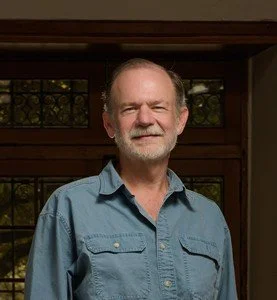
Title: Geometric Folding and Origami Mechanisms
Abstract: In this two-hour workshop, you will learn some of the principles that turn origami patterns into useful mechanisms used in space, medicine, and other technologies. Along the way you will fold several origami patterns that are used in such mechanisms, including grippers, Miura and Yoshimura patterns, flashers, and more.
Bio: Robert J. Lang has been an avid student of origami for over fifty years and is now recognized as one of the world’s leading masters of the art. He is one of the pioneers of the cross-disciplinary marriage of origami with mathematics and his design techniques have been adopted by origami artists worldwide. He has consulted on applications of origami to medical devices, air-bag design, and space telescopes, is the author, co-author, or editor of twenty-one books and numerous articles on origami and lectures on the connections between origami, mathematics, science, and technology.
Lauralea Otis, Disney Studios
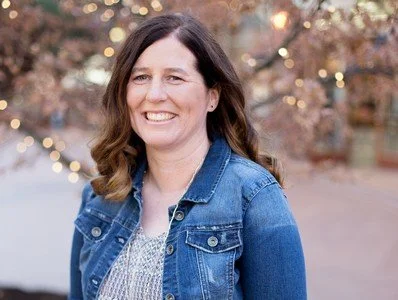
Title: An Intersection of Math and Creativity
Abstract: My presentation traces a career at the intersection of mathematics, programming, and visual storytelling – from undergraduate studies in music and computer science at BYU through graduate work and into feature animation and visual effects. It covers early work at a visual effects company Digital Domain (shader writing and pipeline tools), the shift as renderers absorbed some of that work, and a move to Disney Animation as a technical director from Frozen to Moana, including work with the in-house path tracer Hyperion. The narrative then follows a transition to Marvel Studios and a focus on color science and imaging (e.g. ACES, color transforms), and finally to the Disney Studios technology group, where the work spans data transfer, databases, screening rooms, and tools that must scale across many films and Disney+ content. The presentation emphasizes building tools so that artists and filmmakers can work efficiently, the impact of increasing compute and scale, and the growing role of AI in production. It closes with personal reflections on a bath that began in the BYU CS lab and led to onset experiences and a career bridging technology and creativity.
Bio: Lauralea’s career spans nearly two decades across visual effects, animation, and studio technology. Beginning at Digital Domain in 2006, her work focused on digital lighting, shader development, and pipeline tools. In 2013, she joined Walt Disney Animation Studios as a Lighting Technical Director, contributing to films from Frozen to Moana and playing a key role in the studio’s transition to a new renderer and playback system. In 2016, she transitioned to Marvel Studios, where she developed a comprehensive suite of production tools and partnered with engineering teams to support globally distributed shoots and workflows. In 2024, Lauralea’s team moved to Disney Studios, where she currently manages a team working across the Disney slate, supporting databases, data transfer, screening rooms, and broader production infrastructure. Lauralea’s work has contributed to more than 50 films and television projects, and she continues to push the boundaries of technology in filmmaking.
Ben Woodruff, Brigham Young University - Idaho
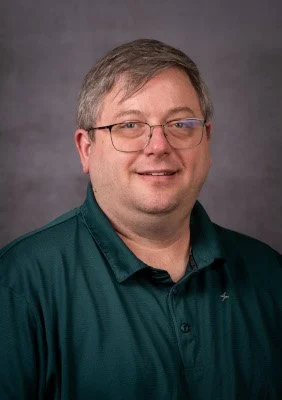
Title: The Power of a Grimace: How One Banquet Changed My Classroom
Abstract: At our MAA banquet in 2019, my table was deep in a discussion about assessment. I was busy justifying my traditional exams in upper-division courses when a colleague responded with a candid, unintentional grimace. It was a small moment, but that unfiltered reaction gave me the courage to finally challenge my own traditions.
I'll share my personal journey of questioning core beliefs. It traces my path from managing bottleneck courses with low pass rates to discovering a success in Inquiry-Based Learning (IBL) and the transformative power of specifications grading. I'll share how our MAA community provided the mirror I needed to see my own biases and the tools I needed to build something better. As AI flips Bloom’s taxonomy on its head, I'm excited to work together to build new traditions. Join me for a reflection on the productive struggle of change, both for our students and for ourselves.